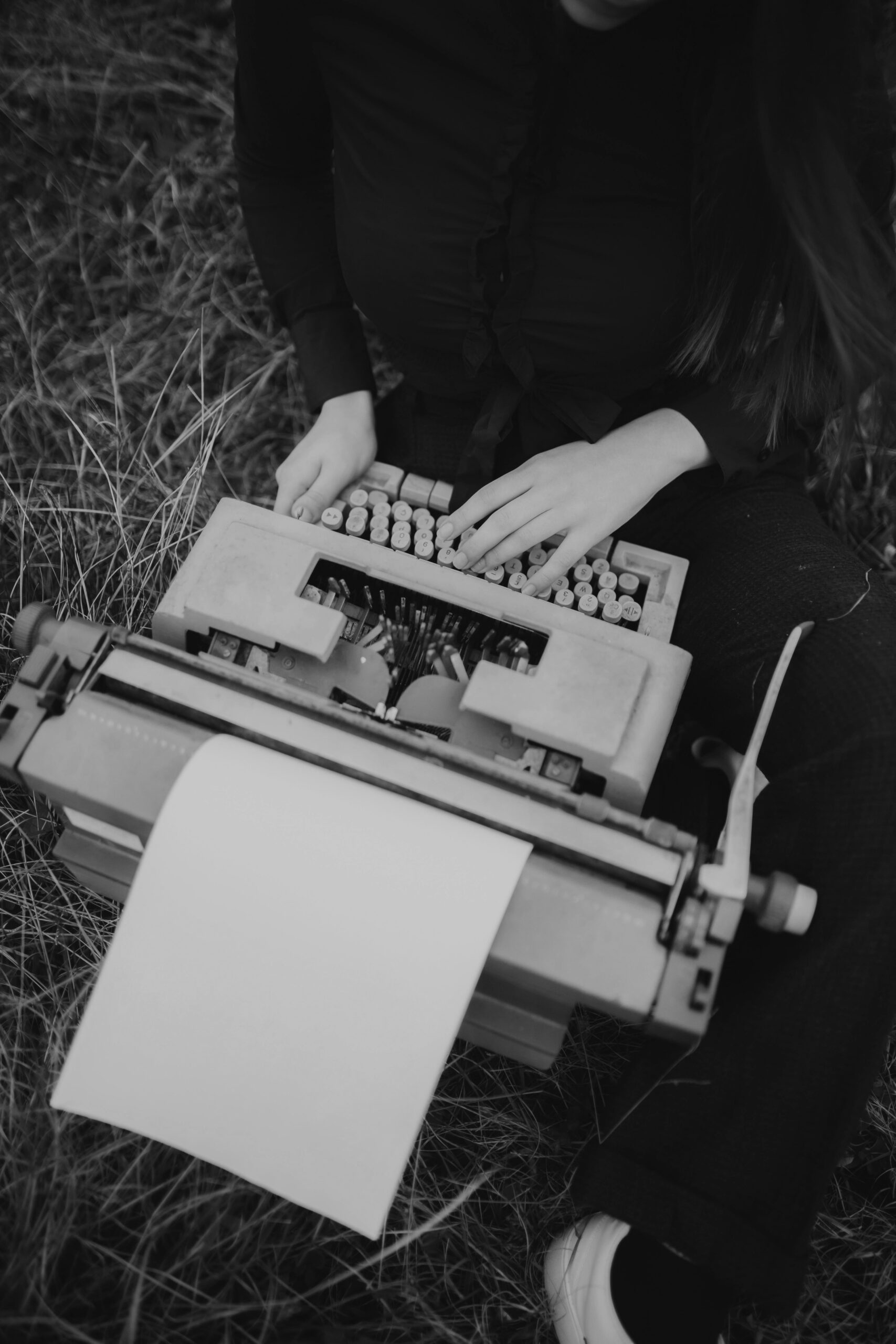
It wasn’t until the last year that I feel like I know what I’m doing with writing, despite having been tinkering with fiction for over 13 years.
And the things that made the biggest difference in my writing weren’t rules. It wasn’t some magical technique that somehow snapped me into focus after 12 years of struggling.
It was mostly changes in how I thought about writing in the first place—what I paid attention to, how I worked, and what I was actually trying to accomplish on the page.
Some made me a better writer. Some made writing easier. And a few changed what I thought good writing even was.
So if I had to start those 13 years over, these are the nine things I’d learn first.
1. Get better at noticing things.
One of the best things you can do for your writing has nothing to do with putting words on a page.
Get better at noticing.
Notice how people answer questions they don’t want to answer. Notice the weird thing someone does with their hands when they’re uncomfortable. Notice what a room smells like, what people complain about, what makes you unexpectedly sad, what makes you laugh when nobody else does.
Notice the way plants grow. How animals communicate. What it sounds like at 4am when the day is still waiting to happen.
I’ve found story ideas in kids playing tug-of-war. I’ve learned things on cave tours that changed the way I think about geography and physical spaces in fiction. The more attention I pay to the world, the more material I have when I sit down to invent one.
Because imagination doesn’t have to mean creating everything from nothing. A lot of the time, it means noticing something real and asking what else it could become.
And this is specific to every writer. You will notice things I won’t. Lean into your fascinations and pick them apart.
Because that is how your work will feel like your, and nobody else’s.
P.S. if you want more of my brain, the stuff that won’t necessarily
2. Experience more than you write.
For a long time, it was easy for me to think that becoming a better writer meant spending more time writing.
Writing matters. Reading matters. But so does having a life to draw from.
Travel. Take the cave tour. Learn how something is made. Go somewhere unfamiliar. Talk to people. Try something you might be terrible at. Learn about things that have absolutely nothing to do with the book you’re currently writing.
You never really know what will become useful.
The benefit isn’t just having more interesting things to put into stories. Experiences give you more reference points. More sensations. More systems you understand. More kinds of people you’ve encountered. More ways to imagine how something might feel.
You’re giving your imagination more material to rearrange.
And you can start simple. Locally. Find something to do in your town that you haven’t done and see how much it can add to your experience bank. Even if it’s not a cave tour or base jumping. A restaurant you’ve never been to and a dish you’ve never tried before counts.
3. Use what you know intimately.
You don’t have to write a book about painting because you paint.
But knowing what paint feels like when it dries across your fingers gives you something.
So does cooking. Sewing. Photography. Editing video. Gardening. Rock climbing. Fixing cars. Raising children. Playing an instrument. Whatever it is that you know beyond the level of someone who Googled it five minutes ago.
There are details you know because you’ve physically done something. Frustrations you wouldn’t think to research. Tiny decisions that are completely ordinary to someone inside that world and invisible to someone outside it.
Use those.
I know you’ve heard it before. “Write what you know” is iconic for a reason. What this advice misses, though, is to write what you know specifically. Concretely. Intimately.
Specificity makes fiction feel inhabited. And some of your best sources of specificity are probably things you’ve stopped thinking of as interesting because they’re so normal to you.
4. Know what you need before you sit down to write.
This was a huge distinction for me: writing time and figuring-out-what-to-write time are not necessarily the same thing.
I don’t mean you need to outline your entire novel before you draft it. I mean you need to figure out what you need in order to generate words.
Sometimes I need to know where a scene turns. Sometimes I need the exchange of dialogue everything else will build toward. I might need to understand what a character wants, what changes by the end of the chapter, or simply where everyone physically is.
Mostly for me, it’s a rhythm thing. I need to know the rhythm of what I’m about to write. Where tension pulls, where it loosens, the moments to breathe. And that happens after I figure out what events should occur. But everything for me works around the feeling of the prose.
Your requirements might be completely different. Should be, honestly.
The important thing is learning what information your brain needs before prose becomes possible.
Because if I sit down for an hour of writing time but spend 45 minutes trying to determine what the scene even is, the problem isn’t necessarily that I’m slow at writing. I may have just sat down one step too early.
But I spent so many years sitting down to “write” only to be left feeling like a failure when I couldn’t get words down. So now I mentally prep. I sketch out the feeling. I jot down notes on the progression.
Figure out what gets you to the point where you can sit down to write instead of sitting down to figure out what to write.
5. Stop making word-count goals.
I used to write content professionally. I can write 10,000 words in a day.
This has not, notably, resulted in me writing 10,000 brilliant words of fiction every day.
Eventually I had to admit that word production wasn’t actually my bottleneck. And measuring my fiction by the number of words I produced was rewarding me for the wrong thing.
Some of my best writing sessions make my manuscript shorter. Sometimes I finally solve the scene I’ve been stuck on. I rewrite three paragraphs until they do exactly what I need them to do. I delete something that was sending the story in the wrong direction. I figure out a character decision that makes the next five chapters possible.
A word-count goal calls some of those sessions failures.
So I’d rather measure good writing work.
Did I give the book my attention? Did I make meaningful decisions? Did I solve something? Did I make the story better? Is the book farther along because I sat down today?
Words matter eventually. A novel does, unfortunately, require some.
But volume and progress are not always the same thing.
6. Stop trying to become a well-rounded writer.
This one took me a while because naturally, when we notice something we aren’t very good at, we want to fix it.
And yes, if a weakness is actively hurting your stories, work on it.
But I don’t think the goal is to become equally good at every possible component of writing.
Pay attention to what you’re already unusually good at. Maybe it’s dialogue. Maybe it’s interiority. Maybe it’s creating atmosphere, observing people, building intricate plots, writing humor, creating characters people would follow into battle, or finding the exact sentence that makes someone feel something.
Get better at that, too.
Your weaknesses can become competent. Your strengths can become extraordinary.
And honestly? Your weaknesses only need to be as good as they need to be to stop stunting the excellence of your strengths. That’s all.
The things you naturally notice, care about, and execute well are part of what makes your writing yours. Developing them further is how “something I’m good at” can eventually become “something people recognize me for.”
7. They’re techniques, not rules.
“Learn the rules so you can break them” never quite solved the problem for me.
Because calling something a rule still implies there was a correct way to do it in the first place.
Show, don’t tell. Avoid filter words. Don’t use adverbs. Don’t head-hop. Start in the middle of the action.
These can all point toward useful craft principles. But I find them much more useful when I stop treating them as instructions and start treating them as techniques that produce effects.
Showing does something. Telling does something else.
A close POV creates one experience. A more distant one creates another.
Removing a filter word changes the relationship between the reader and the sentence. Keeping it can change that relationship, too.
So instead of asking:
Am I allowed to do this?
I’d rather ask:
What does this choice do to the reader? And is that what I want?
That question gives you far more control over your writing than memorizing what you’re supposedly allowed to put on the page.
8. Frame the experience before you write it.
Before I make hundreds of tiny decisions about prose, I want to understand the experience I’m trying to create.
Who are we experiencing this through? How close are we to them? How much access do we have to their thoughts? What do they notice? What don’t they notice? How does their personality affect the delivery of information? What does the reader understand that the character doesn’t—or vice versa?
POV, tense, narrative distance, personality and delivery aren’t separate boxes I check before I start writing. Together, they create what I think of as the Frame of Experience.
And once I know that frame, a surprising number of smaller decisions become easier.
Because I’m no longer looking at an infinite number of technically possible sentences and asking which one sounds best.
I have a constraint:
How would this story be experienced from here?
That determines what information belongs on the page, when the reader receives it, how it’s interpreted, foreshadowing options, and sometimes even the language available to me.
9. You’re not telling a story. You’re creating an experience in the reader.
This is probably the biggest shift in how I think about writing.
The story exists on the page.
The experience happens somewhere else.
A reader is constantly interpreting what you give them. They’re forming opinions, anticipating things, worrying, judging, hoping, realizing, misunderstanding, changing their minds. They can know something a character doesn’t. They can disagree with a character and still feel what that character feels. They can understand that someone is making a terrible decision while desperately hoping it works anyway.
That is the part of fiction I’m most interested in.
So when I write now, I’m not only asking what happens next or even what my character experiences.
I’m asking:
What is happening in the reader while this happens?
That question has changed the way I think about almost everything else—POV, description, dialogue, exposition, character interiority, showing and telling, pacing, even plot.
Because writing techniques aren’t the end goal.
The reader is.
And once I started writing from the reader’s side of the page, a lot of the things I’d spent years trying to understand finally started making sense.


